
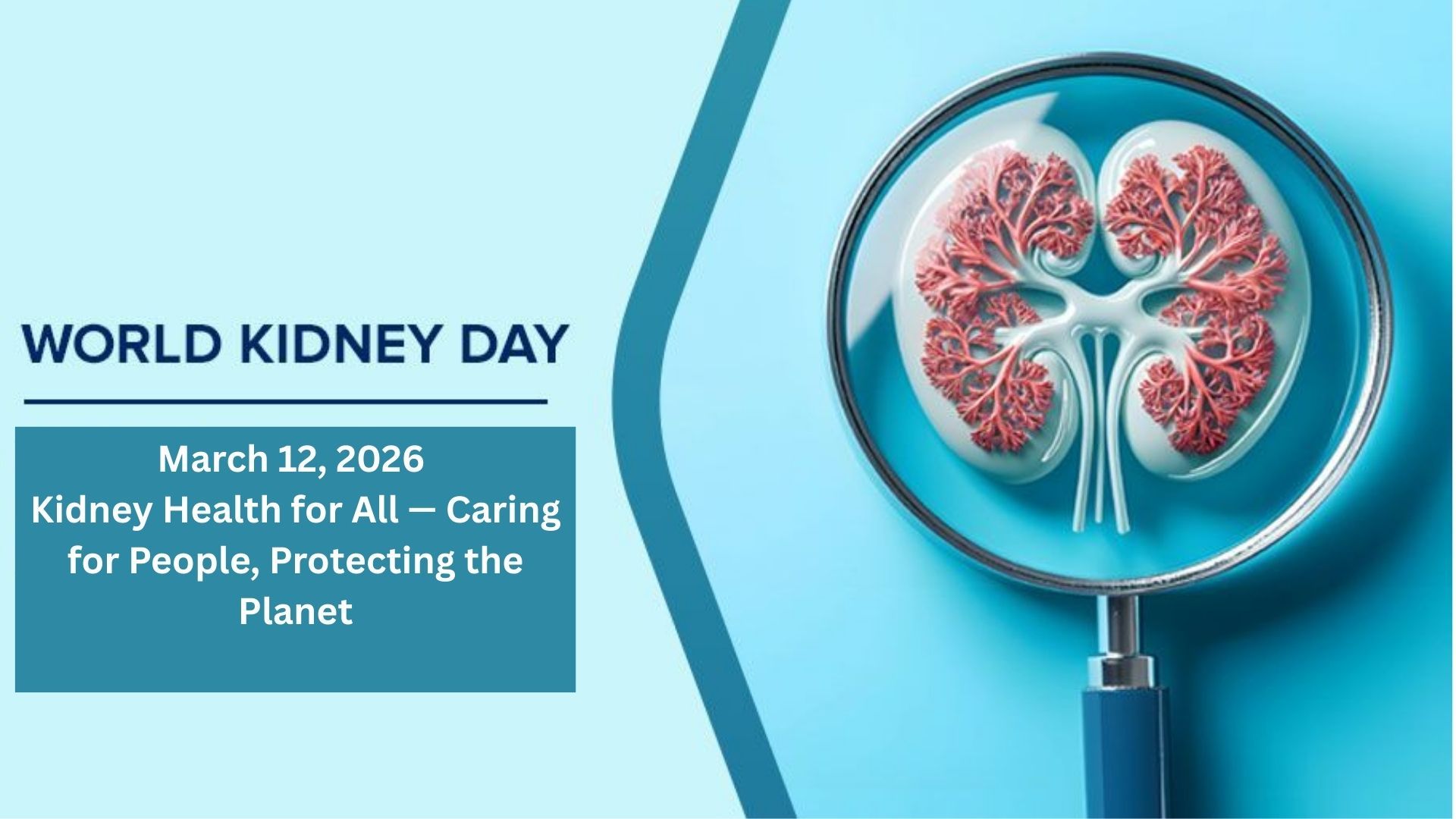
World Kidney Day 2026: Kidney Health for All — Caring for People, Protecting the Planet
On Thursday, March 12, 2026, the global healthcare community comes together to observe World Kidney Day (WKD)—a landmark year that marks two decades of global advocacy, awareness, and action for kidney health. Led by the World Kidney Day initiative, jointly founded by the International Society of Nephrology (ISN) and the International Federation of Kidney Foundations – World Kidney Alliance (IFKF-WKA), WKD 2026 carries the theme:
“Kidney Health for All: Caring for People, Protecting the Planet.”
This year’s theme highlights a critical truth: kidney health is inseparable from social equity, preventive healthcare, and environmental sustainability. At Prantae, this message aligns closely with our mission to advance early kidney disease detection through accessible, responsible, and clinically validated diagnostic innovation.
Kidney Health: A Critical Global and Indian Public Health Priority
Kidney disease represents not only a clinical challenge but a multidimensional global risk spanning health systems, socioeconomic stability, environmental exposure, and coexisting non-communicable diseases. Evidence highlighted by the World Kidney Day scientific consensus underscores that Chronic Kidney Disease (CKD) both reflects and amplifies broader health inequities.
From a health perspective, CKD significantly increases the risk of cardiovascular disease, infections, anemia, mineral-bone disorders, and premature mortality. Because early-stage CKD is frequently asymptomatic, many individuals are diagnosed only when kidney damage is advanced and treatment options are limited. CKD also worsens outcomes in patients with diabetes, hypertension, obesity, and aging-related frailty, creating a cycle of compounding disease burden.
The socioeconomic impact of CKD is profound. Dialysis and transplantation impose long-term financial strain on patients, families, and healthcare systems, particularly in low- and middle-income countries where out-of-pocket expenditure is high and access to renal replacement therapy is uneven. Loss of productivity, long-term disability, and caregiver burden further deepen economic vulnerability and health inequity.
Environmental and occupational factors also play an increasingly recognized role in the risk of kidney disease. Exposure to heat stress, dehydration, ecological toxins, agrochemicals, air pollution, and unsafe drinking water has been linked to the development and progression of CKD, especially among agricultural workers and populations affected by climate change. These risks reinforce the connection between planetary health and kidney health, a central focus of World Kidney Day 2026.
Together, these overlapping risks make CKD not only a medical condition, but a societal and environmental challenge—one that demands early detection, prevention-focused strategies, and sustainable healthcare solutions.
Caring for People: From Late-Stage Treatment to Early, Equitable Prevention
A central goal of World Kidney Day 2026 is to shift healthcare systems from reactive, late-stage treatment to proactive prevention and early intervention. Simple, reliable tests—such as urine albumin or urine albumin–creatinine ratio (uACR)—play a vital role in identifying kidney damage well before symptoms appear.
Early detection enables:
- Slower disease progression
- Reduced cardiovascular risk
- Improved quality of life
- Lower long-term healthcare costs
At Prantae, early kidney diagnostics should not be limited by geography, infrastructure, or reliance on a laboratory. This belief drives our focus on point-of-care diagnostic platforms that deliver laboratory-comparable accuracy closer to patients—whether in tertiary hospitals, primary health centers, or community-based screening programs.
By enabling testing at the point of need, point-of-care diagnostics help bridge gaps in access, support clinicians in timely decision-making, and bring preventive kidney care to underserved populations.
Protecting the Planet: Sustainability as a Pillar of Kidney Care
World Kidney Day 2026 also draws attention to the environmental footprint of healthcare, particularly in chronic disease management. Conventional laboratory diagnostics and dialysis services are resource-intensive, relying on energy-heavy infrastructure, cold-chain logistics, repeated patient travel, and significant consumable use.
As the global burden of kidney disease rises, so does the need for environmentally responsible healthcare innovation.
Prantae’s approach integrates sustainability into diagnostic design by focusing on:
- Compact, portable systems
- Thermostable chemistries that reduce cold-chain dependence
- Low sample volumes and minimal consumables
- Reduced need for centralized laboratory processing
By supporting decentralized testing and reducing repeated hospital visits, point-of-care diagnostics can also lower the indirect carbon footprint associated with kidney care—aligning patient-centered healthcare with planetary responsibility.
20 Years of World Kidney Day: From Awareness to Action at Scale
As World Kidney Day marks its 20th anniversary, the global call is clear: awareness must now translate into measurable action, system-level change, and scalable solutions. The World Kidney Day initiative continues to advocate for:
- Universal access to early kidney disease screening
- Integration of kidney health into primary care
- Policy support for prevention-focused healthcare models
- Sustainable practices across the kidney care continuum
For Prantae, this means continuing to build Made-in-India, globally relevant diagnostic solutions that are clinically validated, accessible, and aligned with public health priorities.
Our Commitment on World Kidney Day 2026
On this World Kidney Day, Prantae reaffirms its commitment to:
- Kidney health for all, through early and equitable access to diagnostics
- Prevention-first care, to reduce the long-term burden of dialysis and transplantation
- Sustainable innovation, aligned with planetary health and responsible healthcare delivery
Because protecting kidney health early does more than save lives—it strengthens healthcare systems, empowers communities, and contributes to a healthier planet.
Happy World Kidney Day 2026!