Two Organs, One Strategy: The 2026 ESC Update
In 2026, the European Society of Cardiology (ESC), in collaboration with the European Renal Association (ERA), published its first guideline dedicated to cardiovascular disease and chronic kidney disease (CKD) as a pair. Titled the 2026 ESC Guidelines for the management of cardiovascular disease and chronic kidney disease, the document appeared in the European Heart Journal, led by chairpersons Kevin Damman and William Herrington, and runs to over a hundred pages. Behind that length sits a message simple enough to remember: anyone looking after the heart should also look at the kidneys, and anyone looking after the kidneys should also protect the heart.
For a general reader, that message matters because the two organs share the same risks, the same warning signs, and, increasingly, the same treatments. This blog walks through what the guideline says, who it concerns, why early screening sits at its centre, and how a point-of-care device such as Proflo-U can help turn its recommendations into something that reaches communities without easy access to a clinical laboratory.
Why Do Heart Disease and Kidney Disease Go Together?
The guideline opens with the scale of the problem. An estimated 100 million people in Europe live with CKD, and the condition is closely tied to a long list of heart and blood vessel problems, including coronary artery disease, heart failure, abnormal heart rhythms, stroke, peripheral artery disease, and sudden cardiac death. The link runs in both directions. Damaged kidneys raise the risk of heart disease, and a weakened heart, particularly in heart failure, can reduce the kidneys' filtering ability in turn. People with both conditions face higher risks and often receive care that is scattered across several specialists.
The authors also point to a wider shift in global attention. In May 2025, the World Health Organization adopted a resolution on reducing the burden of noncommunicable diseases through kidney health, and the ESC task force argues that every clinician, cardiologists included, now has a role in finding CKD early and starting cost-effective care in good time.
India sits firmly inside this picture. Estimates from the Global Burden of Disease study put the country's CKD cases at roughly 138 million in 2023, and the Indian Society of Nephrology has warned that the disease could become a top-five cause of death in India by 2040. The European guideline was written for European populations, yet the logic behind it, that two organs should be checked together and checked early applies anywhere diabetes, high blood pressure, and heart disease are common.
What Is the STAMP on CKD?
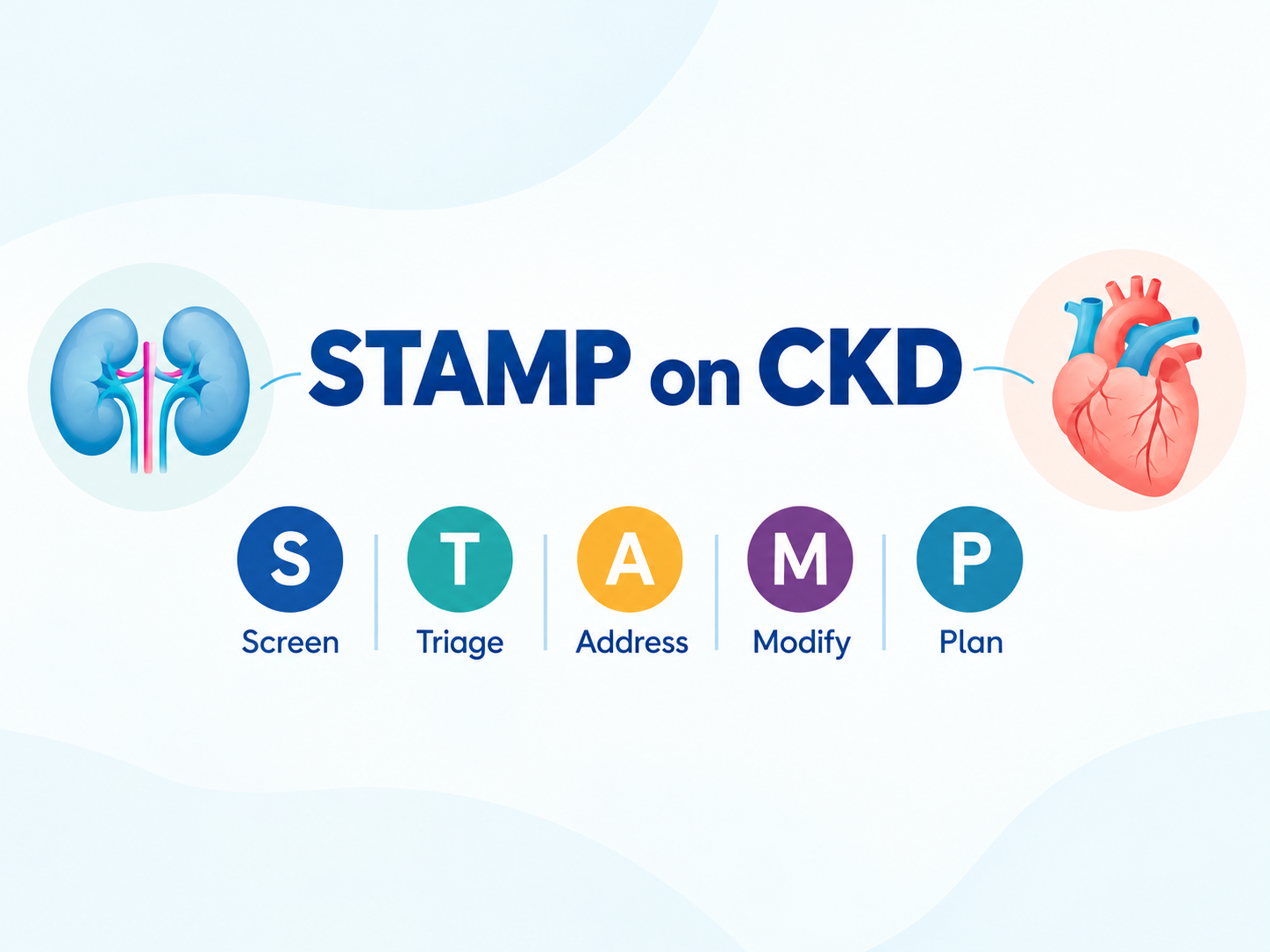
To help busy clinicians remember the guideline's priorities, the task force created an acronym: STAMP on CKD. Each letter stands for one step in the care of a person who has, or may have, both heart and kidney disease. The S stands for screening for CKD. The T stands for triage and staging, which means working out how serious the kidney disease is and who needs what level of care. The A stands for addressing CKD and cardiovascular risk with treatment. The M stands for modifying the way heart conditions are managed when kidney function is reduced. The P stands for planning health services so that high-risk patients are recognised quickly and do not wait for treatment.
Think of it as a short route map. First find the problem, then judge how serious it is, then act on it, then adjust the heart care to fit, and finally make sure the health system can deliver all of this smoothly. The first two steps, screening and triage, carry the most weight for early detection, so they deserve a closer look.
S for Screen: Two Simple Tests
The guideline's screening advice is direct. Anyone with cardiovascular disease, a group that includes people with high blood pressure, coronary artery disease, heart failure, peripheral artery disease, and stroke, should be checked for CKD using two measurements: eGFR and albuminuria.
The first, eGFR, is an estimate of how well the kidneys filter blood. It is calculated from a blood creatinine result using a validated equation that accounts for age and sex. The second, albuminuria, is the leakage of a protein called albumin into urine, and it is measured with the urine albumin-to-creatinine ratio, or uACR, on a single spot sample.
Three details in the guideline's discussion of the uACR stand out. First, albuminuria often appears before eGFR starts to fall, which makes the spot uACR especially well suited to finding early CKD. Second, the ratio is preferred to urine albumin alone because dividing by creatinine corrects for how dilute or concentrated the urine happens to be. A first-morning sample gives the best match with a full 24-hour collection, though a random sample is acceptable for screening when convenience matters. Third, the authors observe that albuminuria is frequently under-measured, and that for many people, predicting the risk of kidney failure improves more by adding an albuminuria result than by refining the GFR estimate with additional blood tests.
The guideline also speaks plainly about the urine dipstick. It is quick, cheap, and widely available, yet many standard dipsticks only detect albumin at higher concentrations and can miss it when urine is dilute. For that reason, the authors recommend limiting dipsticks to initial testing in settings with limited resources, and they prefer a quantitative uACR for its better sensitivity and specificity.
Two further practical points matter for patients. A single abnormal result is not enough to diagnose CKD, because albuminuria can rise temporarily with fever, strenuous exercise, or a urinary infection, so the guideline asks for confirmation after at least three months. And testing should be repeated: at least once a year for people with diabetes, CKD, or cardiovascular disease, while lower-risk individuals may need a check only every two to three years.
T for Triage and Stage: Reading the Risk Heatmap
Once a result is confirmed, the next question is how serious it is. The guideline defines CKD as kidney damage or reduced function lasting at least three months, and in everyday practice this usually means an eGFR below 60 or a uACR of 30 mg/g (3 mg/mmol) or higher.
Staging then combines the cause of the disease with two numbers: the GFR category and the albuminuria category. These are laid out on a colour-coded grid known as the KDIGO heatmap. The lowest-risk boxes are green, and the colours move through yellow and orange to red as the risk of kidney failure climbs. According to the guideline, people in the yellow zone face a three- to twenty-fold higher risk of kidney failure, those in the orange zone a twenty- to seventy-fold higher risk, and those in the red zone more than seventy-fold. This risk holds regardless of age and sex, and the very-high-risk red zone is one accepted reason to refer someone to a nephrologist. The guideline also adopts the term kidney failure in place of the older phrase end-stage kidney disease for people whose GFR stays below 15.
For people at the more advanced stages, G3 to G5, the guideline recommends a second tool, the Kidney Failure Risk Equation, which combines eGFR, uACR, age, and sex to estimate a person's chance of needing dialysis or a transplant over five years. A five-year risk above roughly 3 to 5 percent is the proposed trigger for nephrology referral. The authors even suggest that laboratories could prompt a uACR test whenever a low eGFR is reported and calculate this risk alongside the results, so that referral and patient conversations happen sooner.
Kidney results also sharpen the heart picture. The guideline advises that cardiovascular risk scores that include eGFR or albuminuria should be preferred for people with CKD, since those two numbers reveal heart risk that a cholesterol and blood pressure check alone can miss.
A, M and P: What Happens After Detection
Finding CKD only helps if something follows. Under the A, for addressing risk, the guideline recommends that most people with CKD receive an ACE inhibitor or ARB along with an SGLT2 inhibitor to slow kidney decline and lower heart risk, that statin-based therapy be offered widely to those with CKD who are not on dialysis, and that people with CKD, type 2 diabetes, and albuminuria be considered for finerenone and semaglutide. SGLT2 inhibitors can safely be started at an eGFR as low as 20.
The M, for modifying heart care, covers how reduced kidney function changes familiar treatments. It touches heart failure, coronary disease, atrial fibrillation, where existing stroke and bleeding risk tools perform poorly in CKD, and the use of contrast dye during scans, where the risk of lasting kidney harm turns out to be rare enough that needed imaging should not be withheld.
The P, for planning health services, asks health systems to recognise high-risk patients early, to communicate clearly with them, to coordinate between specialties, and to build the guideline's tools into national electronic health records and digital health solutions.
What This Means for the General Population
It is worth being clear about what the guideline does and does not say. It does not call for screening everybody. Its screening recommendation is aimed at people with cardiovascular disease, including high blood pressure, and it asks for yearly re-testing in people with diabetes, CKD, or heart disease. Even so, those groups cover a very large share of adults in many countries, India included.
For someone in any of these groups, the practical takeaways are straightforward. Ask for both tests, eGFR and uACR, and not only a blood creatinine value. Expect them to be repeated every year. Do not panic over a single abnormal reading, since confirmation after three months is part of the process, but do not ignore it either. A confirmed result brings real benefits: it opens the door to treatments that protect the kidneys and the heart together, and it gives the doctor a more accurate view of heart risk.
The guideline is equally candid about what remains unknown. Its list of evidence gaps includes the cost-effectiveness of targeted CKD screening in various high-risk populations and the impact of community-based screening programmes in resource-limited settings. In other words, the framework is clear, and the evidence on how best to deliver it in places without well-equipped laboratories is still being built.
The Access Gap Behind the Guideline
Every recommendation above assumes that someone can run the tests. Quantitative uACR, the guideline's preferred method, normally needs a laboratory analyser, a trained technician, and a way to move samples and reports back and forth. For a patient at a primary health centre or a community health camp, that chain often breaks. The fallback, a dipstick, is the very test the guideline describes as insensitive in dilute urine.
This is the situation India's own policy voices have described. A parliamentary standing committee and the Indian Society of Nephrology have both urged routine testing of high-risk adults through primary health centres and Ayushman Arogya Mandirs, settings that often lack on-site laboratories. The ESC guideline supplies the clinical framework for what to measure and how to interpret it. A way of measuring it close to the patient completes the picture.
Where Proflo-U Fits into the STAMP on CKD
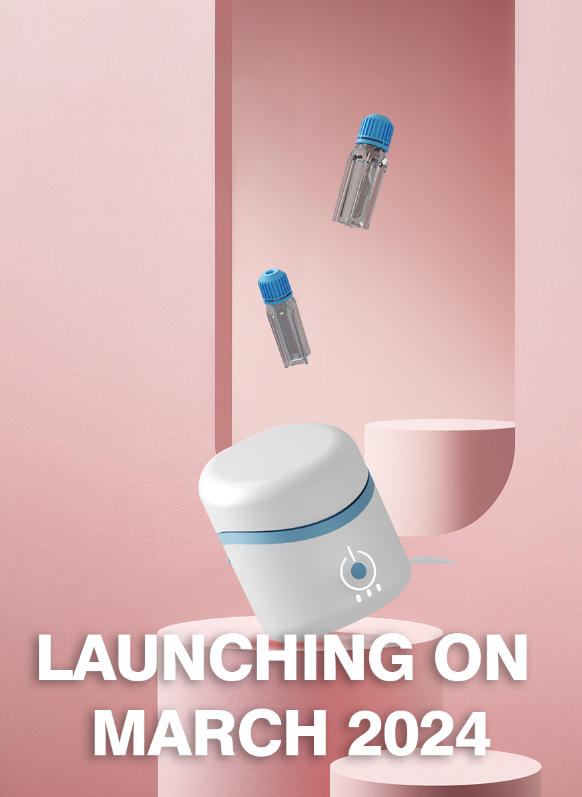
Proflo-U is our patented, CDSCO-approved point-of-care platform, built on nanosensing technology to deliver lab-grade, quantitative uACR results from a urine sample at the place of care. A useful way to see its role is to follow the STAMP letters one at a time. A note on scope first: the ESC guideline does not name or endorse any particular device, and what follows is our reading of how a point-of-care platform can support the framework it sets out. Clinical decisions always rest with the treating clinician.
Screen. The guideline prefers a quantitative uACR and accepts a dipstick only as a stop-gap where resources are limited. Proflo-U brings the quantitative test to the same settings where a dipstick would otherwise be the only option. Because people with diabetes, hypertension, and heart disease already visit their clinics regularly, a uACR can be added to a visit that is already happening, which makes the annual re-testing the guideline asks for far easier to keep up. A cardiology outpatient clinic, a diabetes clinic, a primary health centre, and a community screening camp can all run the same test without sending samples elsewhere.
Triage and stage. Staging needs both axes of the KDIGO grid, albuminuria and eGFR. We are now working to extend Proflo-U so that eGFR, calculated from serum creatinine, can be produced on the same platform, which would let both measurements be captured in a single visit. Alongside this, we are developing a KDIGO-based staging heatmap that places a patient's results on the colour grid and suggests a next step, such as routine annual screening, retesting, or referral, with the clinician reviewing and making the final decision. Choosing the right eGFR equation matters here. The ESC guideline itself notes that one widely used equation overestimates GFR in large parts of Europe, and a 2026 study from PGIMER Chandigarh found that creatinine-based equations overestimated measured GFR in healthy Indian adults by about 24 mL/min/1.73 m² on average. Getting this right for the population being served is part of building the capability responsibly.
Address and Modify. A point-of-care test does not treat anyone. What it does is identify, earlier, the people for whom the guideline's treatments matter, so that a clinician can consider kidney- and heart-protective therapy while there is still kidney function to protect, and can account for kidney status when managing heart conditions.
Plan health services. The guideline asks for its tools to be integrated into national electronic health records and digital health solutions. In India, the matching infrastructure is the Ayushman Bharat Digital Mission, and Prantae Solutions is ABDM compliant. That allows a result generated at a primary health centre to become part of a patient's portable record, available to the doctor who sees them next, which supports the follow-up, annual re-testing, and timely referral the guideline envisions.
What This Means for People Who Live Far From a Laboratory
For a farmer, a daily-wage worker, or an older adult in a small town, the nearest clinical analyser may be a long and costly journey away, and a repeat visit for a second sample or a report is often out of reach. Under those conditions, the screening the guideline describes tends to stay on paper. A point-of-care test changes the arithmetic. The result is available during the visit, so the person can hear what it means and what to do next before leaving the building, and the clinician can act the same day. A person with diabetes or high blood pressure gets a kidney check as part of care they were already seeking, with no extra trip and no waiting for a courier or a call-back. For the many communities where distance and cost decide who gets tested, that shift is the difference between a guideline that exists and one that is used.
From Guideline to Ground Level
Guidelines change care only when their recommendations reach people, and they reach people through settings that already exist: the neighbourhood clinic, the diabetes review, the hypertension check, the screening camp. The 2026 ESC guideline gives clinicians a shared language for heart and kidney risk, and it identifies early, repeated, quantitative testing as the foundation. Putting that foundation within reach of communities that have never had easy access to a laboratory is the work that remains, and it is work we are glad to be part of.
A person's kidneys rarely announce trouble on their own. Their numbers, measured early and read in context, do the announcing, and a health system that listens to them in time spares a heart, a kidney, and a family a great deal.
Source: Damman K, Herrington WG, et al. 2026 ESC Guidelines for the management of cardiovascular disease and chronic kidney disease, in collaboration with the European Renal Association (ERA). European Heart Journal, 2026. DOI: 10.1093/eurheartj/ehag098. Additional context from the Indian Society of Nephrology memorandum on World Kidney Day 2026 and the PGIMER Chandigarh study "Distribution of GFR in Apparently Healthy Indians," American Journal of Kidney Diseases, 2026.