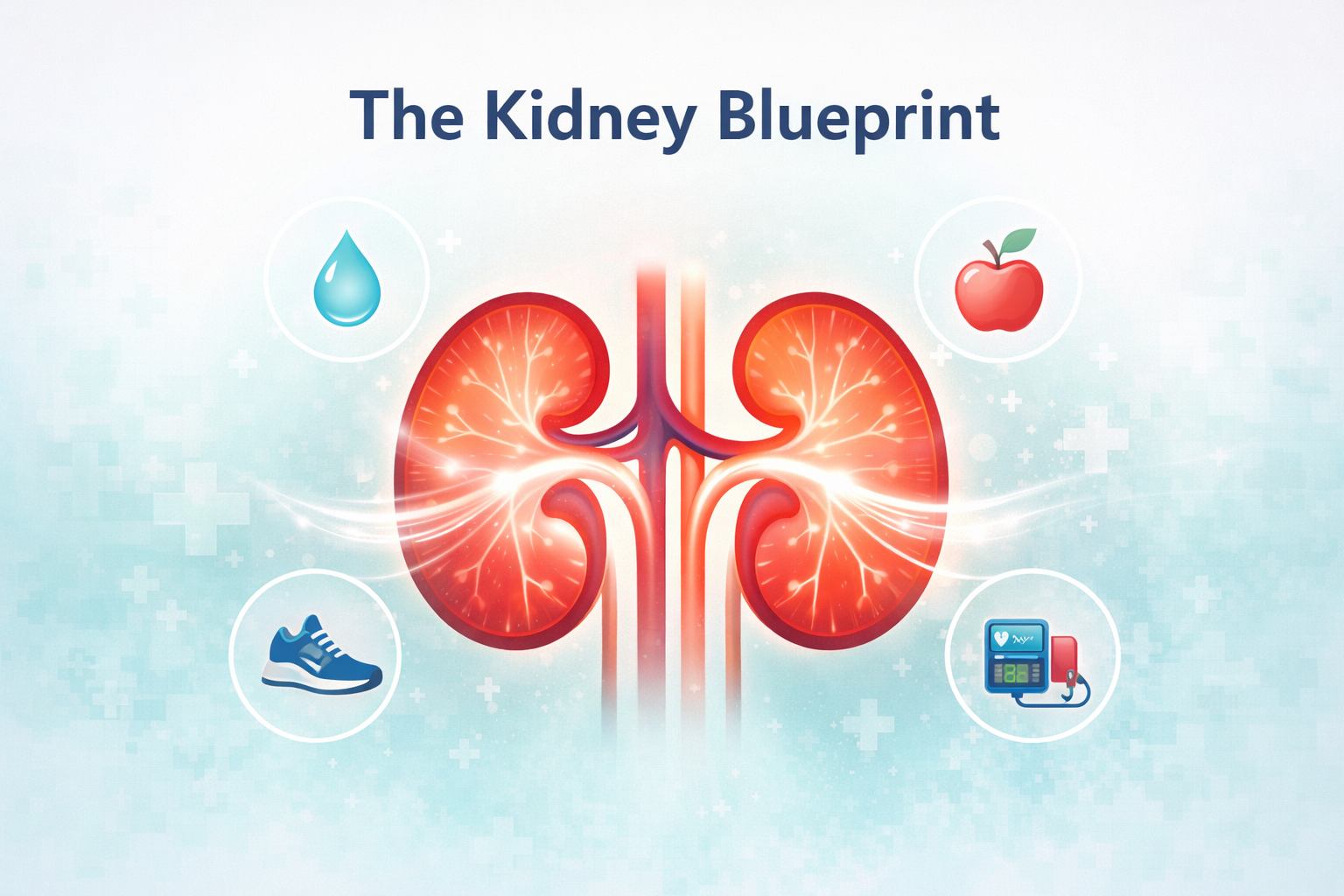
The Kidney Blueprint: How to Defend Your Body’s Master Filters
The kidneys are the silent workhorses of the human body. These bean-shaped organs, each about the size of a fist, perform the Herculean task of filtering waste products, excess water, and impurities from the blood. These toxins are stored in the bladder and then expelled as urine. Beyond filtration, they regulate pH, salt, and potassium levels, and produce hormones that manage blood pressure and control red blood cell production.
However, when kidney function gradually declines over months or years, the condition is known as Chronic Kidney Disease (CKD). According to the International Society of Nephrology (ISN) and the National Kidney Foundation (NKF), CKD is a global health crisis, affecting approximately 10% of the world's population.
This guide explores the mechanics of CKD, how it is staged using international standards, and the actionable "8 Golden Rules" for prevention.
What is Chronic Kidney Disease (CKD)?
Chronic Kidney Disease is defined as the presence of kidney damage or a decreased level of kidney function for a period of three months or more. It is "chronic" because the damage happens slowly and over a long period.
The primary danger of CKD is its subtlety. In the early stages, many people have no symptoms. By the time symptoms such as fatigue, swollen ankles, or shortness of breath appear, the kidneys may already have lost a significant portion of their functional capacity.
How CKD is Staged: The KDIGO Framework
The Kidney Disease: Improving Global Outcomes (KDIGO) organization provides the international gold standard for staging CKD. Staging is primarily determined by the Estimated Glomerular Filtration Rate (eGFR), which measures how many milliliters of blood the kidneys filter per minute.

In addition to GFR, doctors look at Albuminuria (protein in the urine). Higher levels of protein leakage indicate a higher risk of progression toward kidney failure.
Can CKD Be Prevented?
The short answer is: Yes. While some factors like age, ethnicity, and family history are non-modifiable, the two leading causes of CKD—Diabetes and High Blood Pressure—are largely manageable through lifestyle and medical intervention.
Prevention is categorized into two paths:
- Primary Prevention: Identifying at-risk individuals (those with diabetes or hypertension) and managing those conditions to prevent kidney damage from starting.
- Secondary Prevention: Early detection of CKD (Stage 1 or 2) to slow or stop the progression to Stage 5 (Failure).
Exploring the 8 Golden Rules of Kidney Health
To simplify kidney care for the general public, the World Kidney Day steering committee (a joint initiative of ISN and IFKF) established the "8 Golden Rules." These are evidence-based lifestyle interventions designed to reduce the risk of developing kidney disease.
1. Keep Fit and Active
Physical activity helps reduce blood pressure and maintain cardiovascular health, which is vital for kidney protection. You don't need to run marathons; regular, moderate exercise like walking, cycling, or swimming for 30 minutes a day can significantly lower the strain on your renal system.
2. Keep Regular Control of Your Sugar Levels
Diabetes is the leading cause of kidney failure worldwide. About half of the people who have diabetes develop kidney damage. When the blood sugar is high, the "filters" in the kidneys have to work harder, eventually leading to scarring. Regular screening and maintaining a target HbA1c level are essential.
3. Monitor Your Blood Pressure
High blood pressure is the second most common cause of CKD. It is particularly dangerous because it often has no symptoms. A reading of 140/90 mmHg or higher is generally considered the threshold where kidney damage begins to accelerate.
Note: If you have diabetes or existing kidney disease, your target blood pressure may be lower (often 130/80 mmHg).
4. Eat Healthy and Keep Your Weight in Check
A diet rich in fruits, vegetables, and whole grains helps prevent obesity, diabetes, and heart disease—all of which are linked to CKD. Reducing "ultra-processed" foods is key, as these are often hidden sources of sodium and synthetic phosphates that stress the kidneys.
5. Maintain a Healthy Fluid Intake
While there is no "magic number" of glasses of water for everyone, staying hydrated helps the kidneys clear sodium and toxins from the body. For most healthy individuals, 2 liters (about 8 cups) a day is a good target. However, those with existing kidney issues should consult their doctor, as fluid restriction is sometimes necessary in advanced stages.
6. Do Not Smoke
Smoking slows the flow of blood to the kidneys. When less blood reaches the kidneys, it impairs their ability to function properly. Furthermore, smoking increases the risk of kidney cancer by approximately 50%.
7. Do Not Take Over-the-Counter (OTC) Pills Regularly
Common non-steroidal anti-inflammatory drugs (NSAIDs) like Ibuprofen and Naproxen are known to cause kidney damage if taken regularly for chronic pain. If you have healthy kidneys and use them for occasional emergencies, they are usually safe. However, if you have any degree of kidney impairment, even small amounts can be dangerous.
8. Get Your Kidney Function Checked if You Have 'High Risk' Factors
This is the most critical rule. If you have one or more "high risk" factors—Diabetes, Hypertension, Obesity, or a family history of kidney disease—you must ask your doctor for a simple Urine Albumin and Blood Creatinine test annually.
The Path Forward: Awareness and Advocacy
Chronic Kidney Disease does not have to be an inevitable part of aging or a consequence of other health conditions. By understanding the staging and adhering to the 8 Golden Rules, we can bridge the gap between "silent" disease progression and a life of vibrant health.
The National Kidney Foundation emphasizes that "Knowledge is Power." Understanding your GFR number is just as important as knowing your blood pressure or cholesterol levels.