Beyond CKD: Extending the Conversation After National Kidney Month
As the calendar turns from March to April, the echoes of National Kidney Month and World Kidney Day often begin to fade. Every year, March serves as a critical rallying cry for nephrologists, public health advocates, and patients worldwide. The primary focus is clear: raising awareness for Chronic Kidney Disease (CKD) and the life-saving importance of early detection.
However, kidney health is not a thirty-one-day checklist; it is a lifelong physiological narrative. While the "silent" nature of CKD—a condition that often remains asymptomatic until it reaches advanced stages—justifies its place in the spotlight, we must transition from a month of awareness to a lifetime of vigilance. To truly move "Beyond CKD," we must view kidney function not just as a potential site of disease, but as a vital, continuous indicator of our overall systemic health.
The Weight of the Silent Epidemic: Global and Indian Perspectives
The statistics surrounding kidney health are sobering. Globally, Chronic Kidney Disease is a leading cause of death, affecting approximately 850 million people worldwide. It is projected to become the fifth most common cause of years of life lost globally by 2040.
In India, the burden is particularly acute. Driven by a "double burden" of rising lifestyle diseases and environmental factors, CKD has become a major public health challenge.
- Prevalence: It is estimated that roughly 1 in 10 Indians suffers from some form of kidney disease.
- The Diabetes-Hypertension Link: India is often cited as the "diabetes capital of the world," and with hypertension rates climbing, the primary drivers of kidney failure are at an all-time high. Nearly 40-60% of CKD cases in India are attributable to these two conditions.
- Late Diagnosis: Due to a lack of routine screening and the asymptomatic nature of early stages, a vast majority of patients in India present to clinicians only when they have reached Stage 4 or 5—the "End-Stage Renal Disease" (ESRD) phase—where dialysis or transplantation becomes the only option for survival.
These numbers aren't just data points; they represent a significant socio-economic strain on families and the healthcare infrastructure. The shift from "treatment" to "prevention and early management" is no longer an option—it is a necessity.
Redefining Kidney Health: More Than Just a Disease State
For too long, we have discussed kidneys only when they fail. We need to flip the script. Kidney health should be viewed as a continuous health indicator, much like blood pressure or heart rate.
Our kidneys are the body’s master chemists. Beyond filtering waste, they regulate electrolytes, control blood pressure through hormone secretion, and support bone health by activating Vitamin D. When kidney function dips, even slightly, it sends ripples through the cardiovascular and metabolic systems.
By viewing kidney health as a continuum, we move away from the "all or nothing" mindset of kidney failure. We begin to understand that the kidneys are early warning systems for the body. Detecting subtle changes in how they function can provide a window into our metabolic health years before a "disease" diagnosis is ever made.
The Gold Standards of Detection: uACR and eGFR
If kidney health is a narrative, then uACR and eGFR are the primary characters. Understanding these two markers is the first step in taking control of renal wellness.
1. uACR (urine Albumin-to-Creatinine Ratio)
This is often the "canary in the coal mine." The uACR test measures proteinuria—the presence of a protein called albumin in the urine. Healthy kidneys filter waste but keep large proteins like albumin in the blood. If albumin "leaks" into the urine, it is a sign that the kidney's filtration units (nephrons) are damaged.
- Why it matters: uACR can detect kidney damage years before a change is seen in blood-based tests. It is the most sensitive marker for early-stage kidney involvement, especially in diabetic and hypertensive patients.
2. eGFR (estimated Glomerular Filtration Rate)
While uACR looks at damage, eGFR looks at function. Calculated from a blood creatinine test, eGFR tells us how well the kidneys are cleaning the blood.
- The Scale: A normal eGFR is usually above 90. As the number drops, it indicates progressing stages of kidney disease.
The Power of Dual Testing: Relying on eGFR alone can be misleading, as function may appear normal even when damage (proteinuria) is present. Combining uACR and eGFR provides a 360-degree view of kidney health, allowing for a "risk heat map" that guides clinical decisions.
Why Early Detection is the Only Cure
The greatest challenge with kidney disease is its silence. You cannot feel your uACR rising. You cannot feel your eGFR dropping. By the time symptoms like fatigue, swelling (edema), or changes in urination appear, the kidneys may have already lost 50-70% of their function.
Kidney tissue, once scarred (fibrosis), does not regenerate. However, if caught early—at the stage of "Microalbuminuria"—the progression can often be slowed, halted, or in some cases, even reversed through lifestyle modifications, optimized blood pressure control, and modern pharmacological interventions like SGLT2 inhibitors.
Early detection transforms kidney disease from a "death sentence" for the organs into a manageable chronic condition.
Innovation at the Point of Care: The Prantae Approach
One of the largest barriers to early detection, particularly in resource-limited settings or busy clinical environments, is the "gap" between the patient and the laboratory. Traditional testing often requires multiple visits, long wait times for results, and centralized lab equipment.
This is where innovation in diagnostics changes the game. Transitioning to a proactive model of kidney care requires tools that are as dynamic as the disease itself. Point-of-Care (PoC) diagnostics represent the frontier of this shift.
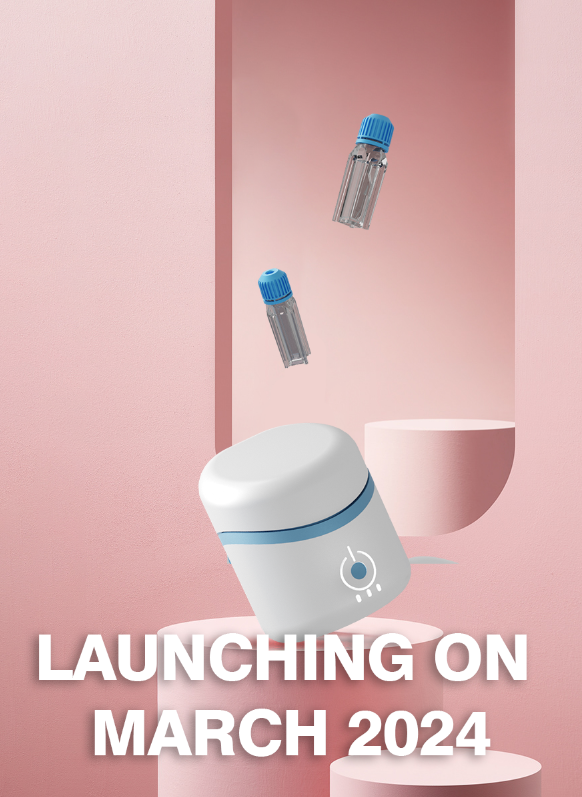
Companies like Prantae Solutions are bridging this gap by developing highly accurate, portable diagnostic solutions. By bringing the "lab to the patient," PoC technology offers:
- Real-Time Decision Making: Clinicians can get uACR results during a single consultation, allowing for immediate medication adjustments or lifestyle counseling.
- Accessibility: Portable devices can reach rural or underserved populations where traditional laboratory infrastructure is absent.
- Portability and Ease of Use: Compact technology ensures that kidney screening can happen in a GP’s office, a health camp, or even a pharmacy, rather than just in specialized hospitals.
By decentralizing diagnostics, we remove the friction of "waiting and seeing," replacing it with "knowing and acting." This is the cornerstone of modern public health innovation—making the most sophisticated markers of health available to everyone, everywhere.
Beyond the Chronic: Kidney Health in Life-Stage Transitions
While the conversation is often dominated by Chronic Kidney Disease, it is vital to recognize that kidney function is dynamic. Kidney dysfunction isn't always a slow, decades-long decline; it can also occur during specific acute conditions and critical life stages.
Our kidneys are highly sensitive to systemic stress. From sudden infections causing Acute Kidney Injury (AKI) to the physiological strain of major surgeries, the kidneys are often the first organs to show distress.
Perhaps one of the most significant, yet frequently overlooked, life stages involving kidney health is pregnancy. During pregnancy, the kidneys must increase their filtration rate by nearly 50% to clear waste for both the mother and the developing fetus. This "renal stress test" can unmask underlying vulnerabilities or lead to pregnancy-specific complications.
As we look beyond the traditional definitions of CKD, we must begin to see the kidneys as central figures in maternal health and beyond.
A New Chapter in Renal Vigilance
National Kidney Month is a wonderful catalyst, but the kidneys don't stop working when April arrives. Our commitment to them shouldn't either. By embracing advanced markers like uACR, utilizing innovative point-of-care tools, and understanding that kidney health is a lifelong journey, we can move from reactive treatment to proactive wellness.
The conversation is evolving. It is moving from the dialysis center back to the primary care clinic, and even further back to the home and the community.