A Turning Point in Preventive Healthcare: The Rise of Kidney and Pregnancy Health Awareness
For decades, two conditions affecting hundreds of millions of people worldwide have operated largely in the shadows of global health policy. Chronic kidney disease (CKD) progresses without pain, without obvious symptoms, and often without diagnosis until the damage is irreversible. Preeclampsia, a dangerous complication of pregnancy marked by high blood pressure and organ dysfunction, has long been accepted as an almost inevitable hazard of childbirth, particularly in low-resource settings. Both conditions have been quietly devastating. And for far too long, both have been systemically underestimated.
That era of neglect may finally be drawing to a close.
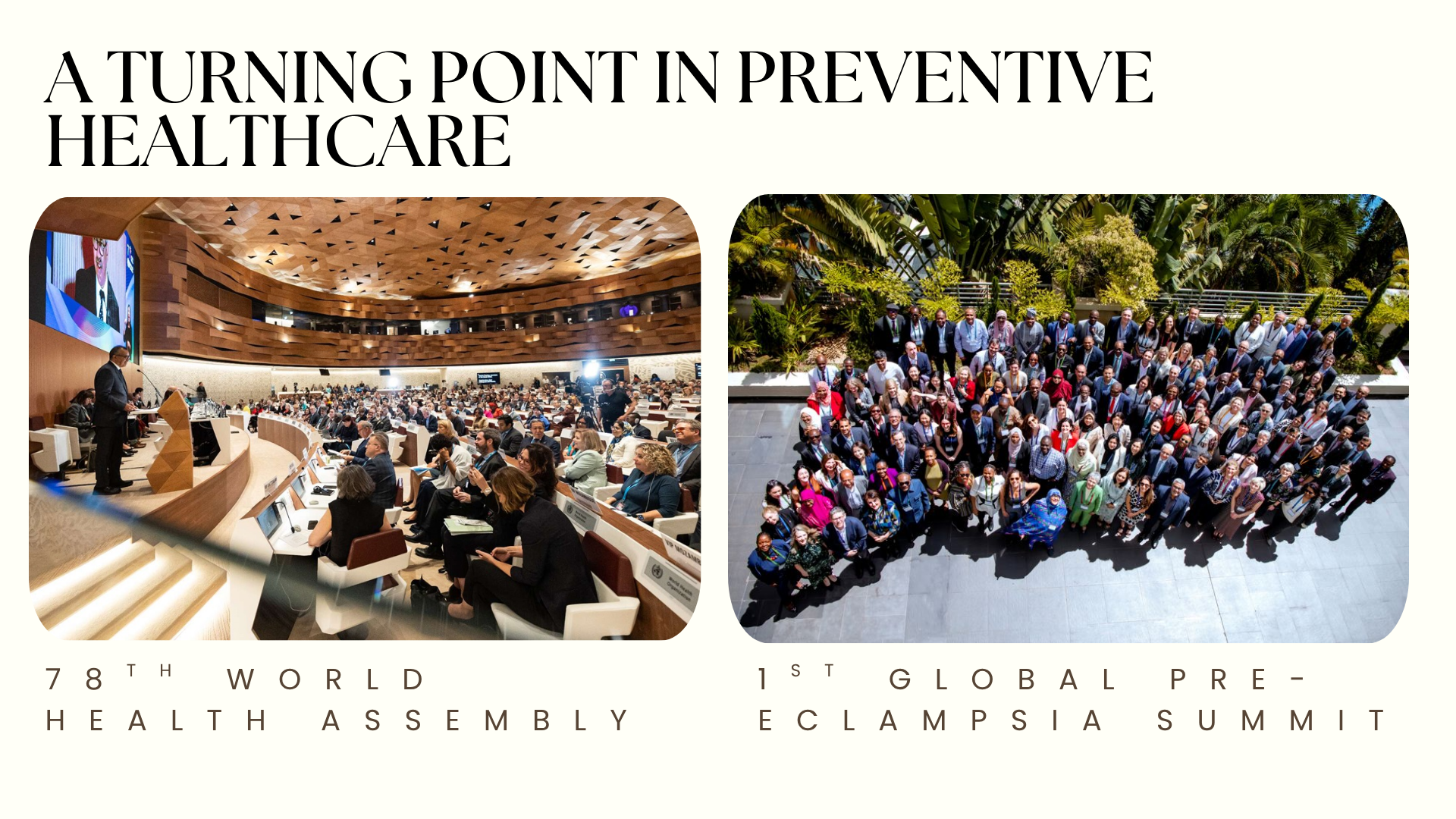
The past year has produced two watershed moments that signal a profound shift in how the world's health institutions approach these conditions. In May 2025, the World Health Organization adopted its first-ever resolution dedicated to kidney health at the 78th World Health Assembly. Just twelve months later, in May 2026, WHO and HRP (the UNDP/UNFPA/UNICEF/WHO/World Bank Special Programme of Research, Development and Research Training in Human Reproduction) co-hosted the first Global Pre-eclampsia Summit in Kigali, Rwanda. Taken together, these events are not merely calendar milestones — they represent a structural reimagining of where preventive healthcare, early diagnostics, and equitable access to treatment must sit on the global agenda.
The Silent Burden We Chose to Overlook
To understand why these developments matter so deeply, we must first reckon with what has been allowed to continue for so long.
Chronic kidney disease currently affects an estimated 850 million people worldwide — a number that dwarfs many conditions that receive orders of magnitude more institutional attention. It is already among the fastest-growing causes of death globally, and projections warn it could become the fifth leading cause of mortality by 2050. Yet for decades, CKD remained conspicuously absent from the WHO's formal non-communicable disease (NCD) agenda, leaving it without the policy scaffolding, funding pipelines, and national health strategy integration that conditions like diabetes and cardiovascular disease had long secured.
The inequity is stark and structural. Approximately 90% of people who need dialysis globally cannot access or afford it. CKD disproportionately affects populations in low- and middle-income countries (LMICs), the same communities where early detection tools are scarcest, primary care infrastructure is most strained, and out-of-pocket health expenditure is most catastrophic. The disease was not simply under-researched; it was undervalued by the very systems designed to protect population health.
Preeclampsia tells a parallel story. This hypertensive disorder of pregnancy accounts for 16% of all maternal deaths globally and contributes to approximately half a million fetal and newborn deaths every year. Despite being a leading cause of preventable maternal mortality, it received no dedicated global policy framework for decades. Clinical knowledge existed. Warning signs were understood. But the translation of that knowledge into equitable diagnostic capacity, treatment access, and coordinated global action never materialised at the scale the burden demanded. In low- and middle-income countries, where the maternal death toll is disproportionately concentrated, the absence of affordable first-trimester screening, essential antihypertensives, and trained frontline clinicians has made the condition a persistent, predictable tragedy.
A Resolution That Rewrites the Rules
When the 78th World Health Assembly adopted the kidney health resolution in Geneva on 23 May 2025, it did something that advocates had been working toward for years: it formally recognised kidney disease as a critical component of global NCD strategy for the first time in WHO history.
Proposed by Guatemala and co-sponsored by a coalition of more than 20 member states, the resolution calls on all member states to integrate kidney care into national health strategies, enhance prevention and early detection, strengthen primary care systems, and expand access to kidney replacement therapy. It explicitly links kidney health to UN Sustainable Development Goals 3.4 and 3.8, the targets for reducing premature NCD mortality and achieving universal health coverage, anchoring what has historically been an overlooked condition to the very frameworks driving global development policy.
The economics alone make the case compelling. Research suggests that well-structured kidney health interventions can generate returns of up to 45 USD for every dollar invested, through reduced dialysis dependency, lower hospitalisation rates, and preserved workforce productivity. Dialysis is not only financially burdensome — it carries a significant environmental footprint as well. Investing upstream in prevention and early detection is not a moral luxury; it is a fiscal imperative.
For the International Society of Nephrology and the global kidney community, the resolution represented the culmination of years of sustained, strategic advocacy. But it also marks a beginning, the moment when rhetoric becomes obligation, and commitment becomes measurable policy action.
From Kigali, a New Global Roadmap for Maternal Health
If the kidney resolution represented a landmark for NCD governance, the first Global Pre-eclampsia Summit held in Kigali in May 2026 marked an equally decisive turning point for maternal health.
Convened by WHO in partnership with HRP, the Summit brought together researchers, policymakers, funders, clinicians, product developers, advocates, and global health agencies under one roof, and with one urgent mandate: to accelerate progress on preventing, diagnosing, and treating preeclampsia worldwide. The scope of ambition is significant. Participants were tasked not only with reviewing persistent research and implementation gaps, but with agreeing on a coordinated Global Roadmap and Call to Action to guide investments and policy efforts through 2030 and beyond.
The Summit's agenda confronts the full complexity of the challenge. Beyond the science of the condition itself, it grapples with the systemic obstacles that have allowed preeclampsia to remain so deadly: lack of affordable first-trimester diagnostic tools; gaps in regulatory approval pathways for essential medicines in LMICs; fragmented supply chains for antihypertensive commodities; and persistent inequities in which women receive quality antenatal care. By convening the stakeholders who control these levers alongside the clinicians and advocates who see the consequences of their absence, the Summit is designed to produce actionable, implementable change, not just consensus statements.
The choice of Kigali as the Summit's location is itself a signal. Rwanda has become a model for health system strengthening in sub-Saharan Africa, demonstrating that strong community health infrastructure, digital health integration, and political commitment can meaningfully shift maternal health outcomes even within constrained resource environments. Hosting a global dialogue on preeclampsia, here is a statement about where the solutions must ultimately take root.
The Convergence: Early Detection, Equity, and Systems Thinking
Viewed together, the kidney health resolution and the Global Pre-eclampsia Summit reflect something larger than policy victories in two clinical domains. They point toward a fundamental reorientation of global health strategy, one that prioritises prevention over late-stage treatment, early diagnostics over crisis response, and equity over the default assumption that advanced care is simply unavailable in poorer countries.
CKD and preeclampsia are intimately connected, both biologically and systemically. Preeclampsia is itself a significant risk factor for the later development of CKD and cardiovascular disease. Women who survive severe preeclampsia carry elevated long-term kidney disease risk, a link that underscores why maternal health and chronic disease prevention cannot be governed in silos. Integrated care pathways that follow women through pregnancy and into long-term cardiorenal surveillance could simultaneously improve outcomes in both domains.
Both conditions also share a critical dependency on primary care. The most powerful interventions for CKD, such as blood pressure management, glucose control, and early nephrology referral, are most effective when initiated in primary health settings before function deteriorates. Similarly, preeclampsia screening and prevention with low-dose aspirin, where indicated, are first-trimester interventions that require only a functioning primary care infrastructure and an affordable diagnostic test. The barriers are systemic, not scientific.
This is why early risk detection and equitable access to diagnostics have emerged as the connective tissue linking these two global movements. Point-of-care urine tests for proteinuria, blood pressure monitoring at the community level, serum creatinine screening, and first-trimester biomarker tools are not high-technology luxuries. With appropriate policy support and supply chain investment, they are deployable at scale. The political will to deploy them, backed now by WHO resolutions and global summits, is what has historically been absent.
The Road Ahead: From Recognition to Implementation
Recognition, however historic, is not transformation. The momentum created by these two landmark events must now translate into sustained national policy action, equitable resource allocation, and accountability mechanisms that hold health systems to their commitments.
For CKD, this means member states moving beyond endorsing the resolution to integrating kidney screening into routine primary care visits, training frontline health workers in early identification of risk factors, and embedding kidney health indicators into national NCD monitoring frameworks. For preeclampsia, it means ensuring that the Global Roadmap agreed upon in Kigali produces concrete country-level commitments on funding, on regulatory reform, on commodity access, and on the community health infrastructure that delivers antenatal care to the women who need it most.
The global health community has, for too long, allowed the silence of these conditions, their lack of dramatic acute presentations, and their tendency to affect populations with less political voice to become a rationale for inaction. That rationale is no longer available.
The 850 million people living with CKD deserve health systems that see them before they reach kidney failure. The women who develop preeclampsia, most of them in communities where maternal death is still treated as an expected risk rather than a preventable tragedy, deserve diagnostic tools, trained clinicians, and essential medicines that reach them before the crisis, not after.
The institutional recognition is finally here. Now comes the harder work of making the promises real.
This article reflects on recent developments in global public health policy and is intended for healthcare professionals, researchers, policymakers, and advocates working across maternal health, nephrology, and non-communicable disease prevention.